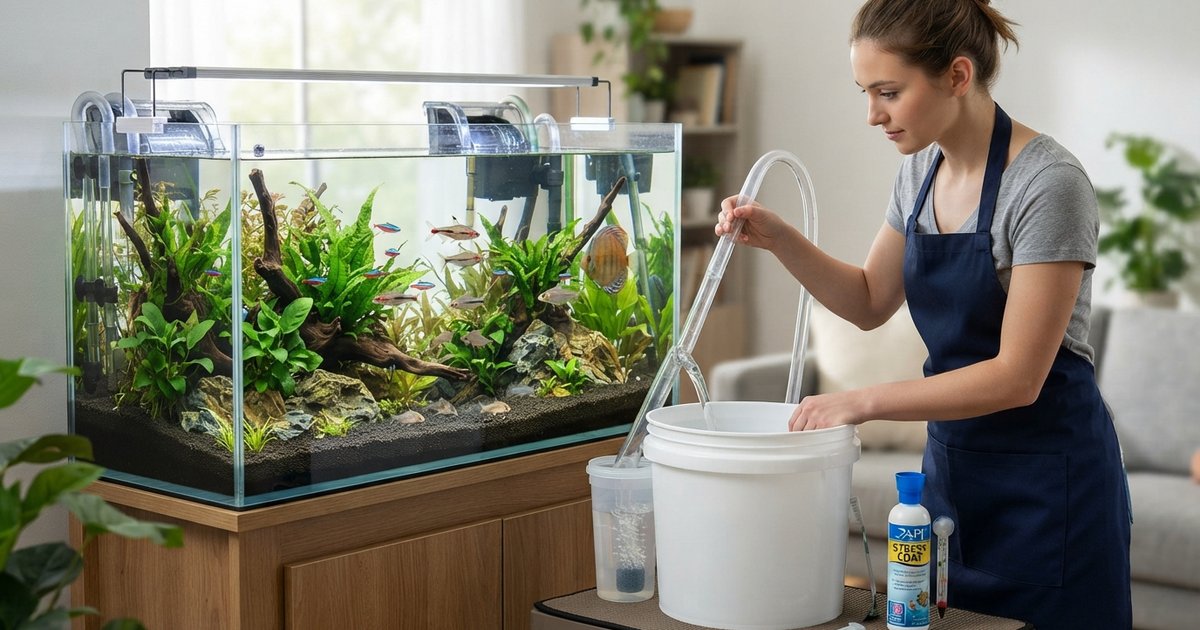
Learning how to change fish tank water properly is the single most important maintenance skill for keeping fish alive. Regular partial water changes remove harmful nitrates, ammonia, and waste that even the best filters can’t eliminate. Without these changes, toxins accumulate to dangerous levels, stressing fish and inviting disease.
Most tanks need 25-30% of their water changed weekly or bi-weekly, never 100% at once. Replacing all the water destroys beneficial bacteria and shocks fish with sudden chemistry changes. The process takes 20-30 minutes with basic equipment: a siphon or gravel vacuum, a bucket, and water conditioner to neutralize chlorine.
Why Partial Water Changes Matter for Fish Health
Nitrates accumulate in every aquarium, even with the best filtration system running 24/7. When levels climb above 40 ppm, fish experience chronic stress that weakens their immune systems and triggers disease outbreaks. These toxins build up from fish waste, uneaten food, and decaying plant matter. Your filter converts deadly ammonia into nitrite, then into nitrate, but it can’t remove that final compound. Only water changes export nitrates from your closed system.
Replacing all the water at once destroys the beneficial bacteria colonies living in your substrate and filter media, the same bacteria that convert deadly ammonia into less harmful compounds. A complete water change also shocks fish with sudden shifts in temperature, pH, and mineral content. Partial changes of 25 to 50 percent maintain stable water chemistry while refreshing dissolved oxygen levels and removing debris that clouds your water. The remaining 50 to 75 percent of old water buffers against parameter swings, giving fish time to adjust to the new conditions gradually.
Tank volume, stocking density, and filtration capacity determine your change frequency. A heavily stocked 20-gallon tank with a dozen fish needs weekly water changes, while a lightly populated 55-gallon setup with strong filtration might stretch to every two weeks. Test nitrate levels regularly to find the schedule that keeps your specific tank below 40 ppm between changes. Goldfish tanks always need weekly changes regardless of size because these fish produce three times the waste of tropical species.
Equipment You’ll Need for a Water Change
Before you start siphoning water, gather the right tools to make the job efficient and safe for your fish. Using equipment that’s never touched soap or household cleaners prevents chemical contamination that can kill an entire tank overnight.
- Aquarium siphon or gravel vacuum in manual or electric models. Manual siphons cost $10 to $20 and work by gravity, while electric versions run $30 to $50 and speed up the process for larger tanks. Choose a diameter that matches your tank size (smaller tubes for tanks under 20 gallons, wider ones for 55+ gallon setups).
- Clean bucket(s) designated only for aquarium use. A 5-gallon bucket works for most tanks, but keep two on hand if you’re changing water in a 40+ gallon aquarium. Mark these buckets clearly and store them away from cleaning supplies to prevent accidental contamination.
- Water conditioner or dechlorinator to neutralize chlorine and chloramine in tap water. Most municipal water contains these chemicals at levels that burn fish gills within minutes. Add conditioner to new water before it goes into the tank, following the dosage on the bottle (typically 1 ml per gallon).
- Algae scraper or pad for cleaning glass before you start siphoning. Scrubbing first lets the siphon pull away the loosened algae and debris instead of leaving it floating in the tank.
- Optional additions: a thermometer to match new water temperature within 2 degrees of tank water, or a Python no-spill system that connects directly to your faucet and eliminates bucket carrying entirely for $40 to $60.
Step-by-Step: How to Change Fish Tank Water Safely
**Step 1: Unplug all electrical equipment.** Before your hands go anywhere near the water, disconnect the heater, filter, and any lights or air pumps. Heaters can crack or malfunction when exposed to air while still hot, and filters can burn out their motors if they run dry. This single precaution prevents equipment damage and eliminates any shock risk.
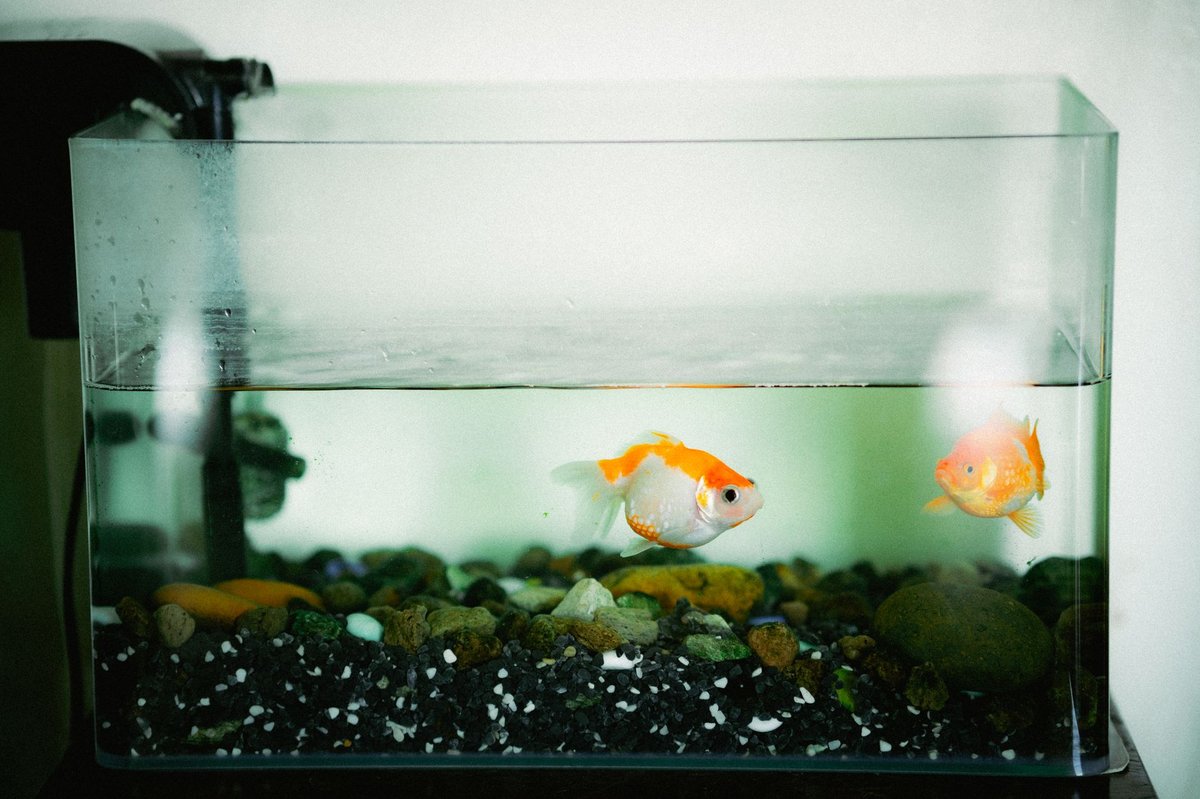
**Step 2: Scrape algae off the glass.** Use an algae pad or scraper to remove buildup from the front and side panels. The debris you dislodge will get siphoned out with the old water in the next step, saving you from clouds of floating algae particles. This is the perfect time to flip decorative rocks if algae is growing on them, burying the green side to kill it off naturally.
**Step 3: Start the siphon and vacuum the gravel.** Insert your gravel vacuum into the tank and begin the water flow into your bucket. Push the vacuum tube into the substrate in small circular motions, watching waste and debris rise up through the tube while the heavier gravel falls back down. Work methodically across the bottom, spending a few seconds in each spot. If you’re learning how to change water in betta fish tank setups or smaller aquariums, use a narrower siphon to avoid removing water too quickly.
**Step 4: Remove 25 to 30% of the total volume.** For a 40-gallon tank, that means siphoning out about 10 gallons. Stop before the water level drops below your filter intake or exposes the heater element. Removing more than 50% at once can destabilize water chemistry, so even if the tank looks dirty, resist the urge to drain it further. The remaining water buffers against pH swings and temperature shifts when you refill.
**Step 5: Dispose of the old water.** The easiest option is pouring it down a drain, but old tank water makes excellent fertilizer for houseplants and gardens. It’s loaded with nitrates and organic nutrients that plants absorb readily, so nothing goes to waste.
**Step 6: Prepare the replacement water.** Fill your bucket with tap water that matches your tank temperature within 2 to 3 degrees Fahrenheit. Add water conditioner according to the bottle instructions, which typically means one capful per 10 gallons. The conditioner neutralizes chlorine and chloramine that would otherwise kill your fish and beneficial bacteria. Let it sit for 30 seconds to mix thoroughly.
**Step 7: Refill the tank slowly.** Pour the treated water back in gently, aiming the stream at a decoration, rock, or the glass wall to break the flow. This prevents the water from blasting into the substrate and kicking up debris or stressing your fish with turbulence. Once the tank is refilled, plug your equipment back in and verify everything restarts properly.
How to Condition Water for Fish Tank Water Changes
Tap water contains chlorine and chloramine, chemicals that municipal water systems add to kill bacteria. These same chemicals burn fish gills on contact and wipe out the beneficial bacteria colonies living in your filter and substrate. Adding untreated tap water directly to your tank can trigger an ammonia spike that kills fish within hours.
Dose based on the volume of water you’re adding, not your total tank size. If you’re replacing 5 gallons, treat 5 gallons. Seachem Prime, API Stress Coat, and Tetra AquaSafe each list exact measurements on the label. Follow those instructions for your specific water volume. Most conditioners work instantly on contact, but letting treated water sit 5 minutes ensures complete neutralization before it touches your fish.
If you use a Python-style refill system that connects directly to your faucet, add the conditioner straight to the tank before turning on the water. The incoming flow mixes the treatment throughout the aquarium as it fills. Well water users face different challenges. Test your well water for heavy metals and pH levels before each change, since these can fluctuate seasonally. Spring runoff can drop pH by a full point or introduce iron that stains decorations orange.
How Often to Change Fish Tank Water (By Tank Type)
The frequency of water changes depends heavily on your specific tank setup. Standard freshwater community tanks need 25 to 30 percent weekly or 40 to 50 percent bi-weekly to keep nitrates in check. Goldfish produce far more waste than tropical fish, so their tanks require 30 to 40 percent weekly changes regardless of filtration quality.
Betta fish in bowls or small tanks under 5 gallons without filters need 25 percent changes twice weekly. The limited water volume means toxins concentrate rapidly in these setups. Planted tanks can stretch to 20 to 25 percent weekly since aquatic plants consume some nitrates, but they don’t eliminate the need for water changes entirely.
New tanks in their first 4 to 6 weeks require a lighter touch. Remove only 10 to 15 percent weekly without disturbing the gravel, since beneficial bacteria colonies are still colonizing the substrate and filter media. Aggressive vacuuming during this period can crash the nitrogen cycle before it establishes. Tanks running without filters need 30 to 50 percent changes every 3 to 4 days minimum because there’s no biological filtration to process ammonia between changes.
Common Water Change Mistakes to Avoid
A 100 percent water change strips away every beneficial bacteria colony in your tank, forcing the nitrogen cycle to restart from zero. Fish experience fatal parameter shock when pH, hardness, and temperature all shift at once. A tank that’s been running at pH 7.8 for months, suddenly filled with fresh tap water at pH 6.5, will stress fish into disease within 24 hours. Stick to 25 to 50 percent changes to preserve biological stability while still removing accumulated waste.
Adding untreated tap water directly to your tank kills fish and bacteria on contact. Chlorine burns gill tissue within seconds and wipes out the nitrifying bacteria that process ammonia. Always dose water conditioner into your refill bucket before pouring, or add it to the tank immediately before refilling if you treat in the aquarium. Temperature mismatches beyond 3 degrees Fahrenheit stress fish immune systems and trigger disease outbreaks. Match new water temperature to your tank reading before adding it.
Cleaning filter media during the same session as a water change removes too much beneficial bacteria at once. Your biological filtration takes a double hit, risking an ammonia spike within 24 hours. Alternate weeks: change water one week, rinse filter media in old tank water the next. Never use soap-washed buckets for aquarium work. Detergent residue remains even after thorough rinsing and proves toxic to fish at concentrations you cannot see or smell. Designate aquarium-only buckets and label them clearly.
Skipping gravel vacuuming leaves decomposing waste trapped in your substrate. Uneaten food and fish waste break down into ammonia between water changes, poisoning your tank from the bottom up. Run your siphon through the gravel during every water change to pull out debris before it decays.
Troubleshooting: Cloudy Water and Fish Stress After Changes
Cloudy water within hours of a water change typically signals a bacterial bloom triggered by over-cleaning your filter media or shocking the tank with water that’s too cold or too hot. The cloudiness appears milky white as beneficial bacteria multiply rapidly to recolonize surfaces you scrubbed too aggressively. This clears on its own within 24 to 48 hours as the bacterial population stabilizes. Resist the urge to do another water change, which only restarts the cycle.
Fish gasping at the surface immediately after adding new water means chlorine or chloramine poisoning. Your dechlorinator either wasn’t added or the dose was insufficient for the water volume. Add a double dose of water conditioner right away and turn on extra aeration if you have an air stone. Most fish recover within an hour once the chemicals are neutralized, but gill damage from even brief exposure can take days to heal.
Lethargic fish hiding near the bottom after a water change indicates the new water was significantly colder or warmer than the tank temperature. Float sealed bags or bottles of warm water in the tank to gradually raise the temperature one degree per hour, or turn off the heater temporarily if you added water that was too hot. Never add ice or hot water directly, which causes additional temperature swings that compound the stress.
Cloudiness that persists beyond three days points to overfeeding or a filter that can’t handle your bioload, not the water change itself. Cut feeding in half and check that your filter is rated for at least 150 percent of your tank volume. Test your water parameters if fish show continued stress. Ammonia or nitrite readings above 0 ppm require an immediate 50 percent emergency water change with properly conditioned, temperature-matched water to prevent permanent organ damage.
Key Takeaways for Successful Water Changes
Stick to 25 to 30 percent partial changes weekly. This single habit prevents most aquarium problems by keeping nitrates under 20 ppm without shocking your fish with dramatic parameter swings. A 30 percent change in a 50-gallon tank removes 15 gallons of nitrate-laden water while leaving 35 gallons to buffer against pH and temperature shifts. Larger or less frequent changes force fish to adapt to bigger chemistry swings that stress their systems even when the final water quality improves.
Always treat new water with conditioner and match temperature within 2 to 3 degrees Fahrenheit before adding it to your tank. Cold water from the tap can drop your tank temperature by 5 degrees or more during a 30 percent change, sending tropical fish into shock. Fill your bucket, add dechlorinator according to bottle instructions, then let it sit or add warm water until a thermometer confirms it matches your tank. Betta fish and discus are especially sensitive to temperature drops below 76°F.
Vacuum gravel during every change to remove waste that filters cannot reach. Uneaten food, fish waste, and decaying plant matter sink into substrate where they rot and release ammonia between water changes. Your siphon pulls this debris out while removing water, handling two maintenance tasks at once. Move the vacuum head slowly across the bottom in overlapping passes, spending 3 to 5 seconds in each spot until you’ve covered the entire substrate or reached your target water removal.
Mark your calendar or set phone reminders because consistency matters more than perfection. A tank that gets 25 percent changes every seven days stays healthier than one that gets 50 percent changes whenever you remember. Missing a week occasionally won’t crash your system, but skipping three weeks in a row lets toxins climb to dangerous levels that require emergency intervention instead of routine maintenance.
Frequently Asked Questions
How do I change the water in my fish tank without killing the fish?
Change only 25-50% of the water at a time, leaving your fish safely in the tank while you work. Use a siphon or gravel vacuum to remove old water, then refill with dechlorinated water that matches the tank’s temperature. Never do a complete water change, as removing all the water eliminates beneficial bacteria and causes dangerous parameter swings that stress or kill fish.
Should you take fish out of the tank when changing water?
No, you should leave your fish in the tank during routine water changes. Removing fish causes unnecessary stress from handling and netting, and the 25-50% partial water change is safe for them to remain in. The only exception is if you’re treating a disease or doing emergency maintenance that requires a tank to be completely emptied.
How often should you change fish tank water?
Change 25-50% of your aquarium water weekly to maintain healthy conditions for your fish. This regular schedule removes accumulated waste, nitrates, and other pollutants before they reach harmful levels. Brand-new tanks in their first 4-6 weeks of cycling require gentler water changes without disturbing the gravel to preserve developing beneficial bacteria.
Can you do a 100% water change in my fish tank?
No, never do a 100% water change in an established aquarium. Complete water changes eliminate the beneficial bacteria that live in your tank and process fish waste, causing dangerous ammonia and nitrite spikes. Stick to removing only 25-50% of the water during each change to maintain stable water chemistry and keep your fish healthy.
Leave a Reply